| Names: | | | Dates: | 1832 - 1909 | | Born: | Italy, Venice | | Died: | Italy | | Active: | Japan / UK / India / China / Burma |
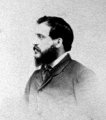
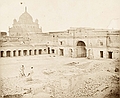
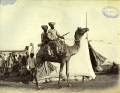
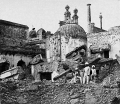
Early travel and war photographer active from 1853 onwards in the Mediterranean and the Crimea sometimes in partnership with James Robertson. He traveled widely and photographed the aftermath of the Indian Mutiny, in Second Opium War in China, Japan and in the Sudan.
Be careful, as there are two brothers Antonio Beato and Felice Beato (Grove Art explains the mystery.)
NOTE: Place and date of birth
Wikipedia [updated]
[1] Recent scholarship had uncovered an application by Beato for a travel permit in 1858 that included information suggesting he was born in 1833 or 1834 on the island of Corfu. Earlier sources had given his birth date as 1825 or ca. 1825, but these dates may have been confused references to the possible birth date of his brother, Antonio. However, the death certificate discovered in 2009 provides the first definitive evidence of Beato's dates and places of birth and death. (Terry Bennett, History of Photography in China, 1842–1860, p. 241)
[2] Beato has long been described as British, Italian, Corfiot Italian, and/or Greek. The movements of his family and of early nineteenth century history in the Adriatic mean that he can justifiably be described by all these terms. Corfu was on and off part of Venetian territory from 1386 until 1815, when the Treaty of Paris placed it and the other Ionian Islands under British protection. Corfu was ceded to Greece in 1864. A line of the Beato family is recorded as having moved to Corfu in the 17th century and was one of the noble Venetian families that ruled the island during the Republic of Venice. (Terry Bennett, History of Photography in China, 1842–1860, p. 241)
D.F. Rennie, The British Arms in North China and Japan: Peking 1860; Kagoshima 1862, (London: John Murray, 1864) p.112.
Writing on the attack on the Taku Forts in China - 21st August 1860
I walked round the ramparts on the west side. They were thickly strewed with dead—in the north-west angle thirteen were lying in one group round a gun. Signor Beato was here in great excitement, characterising the group as "beautiful," and begging that it might not be interfered with until perpetuated by his photographic apparatus, which was done a few minutes afterwards. Not far from this group, a tall and very dignified-looking man of between fifty and sixty, stated to be the general who had conducted the defence, was lying dead, his lower jaw shattered by a rifle bullet.
Captain S.H. Jones-Parry, My Journey Round the World via Ceylon, New Zealand, Australia, Torres Straits, China, Japan, and the United States, Two Volumes (London: Hurst and Blackett, 1881), Volume II, p.25-26
Captain S.H. Jones-Parry recounts his meeting with Signor Beato in Yokohama:
I must not forget to mention that I met my old friend Signor Beato here. I had first made his acquaintance whilst engaged in photography under the walls of Sebastopol; I next accosted him amidst the blood and carnage at Lucknow; and now finally we met in the streets of Yokohama. Could anyone have chosen three more distant places, or more varied circumstances, to meet under? I have seen some splendid specimens of his art taken at all these places. I mention Beato here because he may be said to be the father of photography in Japan, and many of the best negatives there now are his productions. He was a true artist and not only manipulated well, but chose his subjects carefully and treated them artistically. He established his studio at Yokohama, but finding he had larger fish to fry, he sold his business; and I am sure scores of my old comrades will be glad to hear he is doing well. I think, next to Mrs. Seacole, Beato is as well known to the British army as any private individual. Of course I must dine with him: he, in conjunction with another merchant, runs the club, a very comfortable one, at which my name was immediately put down as an honorary member. He promised that I should meet a lot of good fellows, and he kept his word. At the dinner which would have rivalled Barnum's celebrated breakfast, we had such a polyglot lot! English, Welsh, German, Italian, Russian; judges, counsellors, artists, soldiers, merchants, and diplomatists. The cuisine and wines were first rate. I was introduced to the Russian as one who had killed scores of his countrymen at Sevastopol, and we agreed that drinking good champagne with Beato was better than fighting in the Crimea.
His photographs were used as the basis for illustrations in contemporary books including:
James Furgusson A History of Architecture in all Countries, from the Earliest Times to the Present Day, in three volumes, (London: John Murray, 1867)
R. Mounteney Jephson and Edward Pennell Elmhirst, 9th Regiment, Our Life in Japan. With illustrations from Photographs by Lord Walter Kerr, Signor Beato, and Native Japanese drawings, (London: Chapman and Hall, 1869)
Henry Knollys, Incidents in the China War of 1860 compiled from the Private Journals of General Sir Hope Grant, (Edinburgh and London: William Blackwood and Sons, 1875)
Alexander Michie, From Peking to Petersburg, Through the Deserts and Steppes of Mongolia, Tartary, &c., (London: John Murray, 1864)
Robert Swinhoe, Narrative of the North China Campaign of 1860; Containing Personal Experiences of Chinese Characters, and of the Moral and Social Condition of the Country; Together with a Description of the Interior of Pekin, (London, Smith, Elder and Co., 1861)
Stereographs project
Business locations
London, England, UK
[Felix Beato; also in partnership with Henry Peach Robinson in London, 60s] Made fine series of early views of far east; views in U.K. very rare.
T.K. Treadwell & William C. Darrah (Compiled by), Wolfgang, Sell (Updated by), 11/28/2003, Photographers of the World (Non-USA), (National Stereoscopic Association) |
| Credit: National Stereoscopic Association with corrections and additions by Alan Griffiths and others. |
| NOTE: You are probably here because you have a stereograph to identify. Please email good quality copies of the front and back to alan@luminous-lint.com so we can create reference collections for all. |
Preparing biographies
| | Premium content for those who want to understand photography |
References are available for subscribers.There is so much more to explore when you subscribe.
Subscriptions
| |
Family history
If you are related to this photographer and interested in tracking down your extended family we can place a note here for you to help. It is free and you would be amazed who gets in touch.
alan@luminous-lint.com |
|
John Falconer, British Library
A Biographical Dictionary of 19th Century Photographers in South and South-East Asia |
Commercial, India, China, Japan, Korea, Burma
Perhaps the most celebrated and travelled of 19th-century photographers of Asia, particularly attracted to military subjects. The Italian-born Beato was active in partnership with James Robertson as Robertson and Beato, working in Constantinople, the Crimea, Greece and the Holy Land, c.1853-7; India 1858-9, where he photographed the aftermath of the Indian Mutiny; China, 1860; Yokohama, Japan, 1864-85; Korea, 1871; Sudan, 1886; Mandalay and Rangoon, Burma, from late 1880s until c.1906.
1853-7 Meets James Robertson in Malta, and forms photographic partnership with him, working in Constantinople, Athens, Crimea, Holy Land.
1858 To India to photograph mutiny scenes
1859 Recorded in almanacs as resident as photographer in Calcutta. R.C. Tytler (qv) pays credit to Beato for giving him tuition in photography.
1860 To China to photograph Anglo-Chinese War
1861 Probably visits England to market his photographs. A printed catalogue of his Indian and Chinese views published by Hering and in 1862 enthusiastically reviewed in The Athenaeum: ‘At Mr Hering’s, Regent Street, may be seen a large collection of photographic views and panoramas taken by Signor Beato during the Indian Mutiny and the Chinese War...As photographs, these leave nothing to be desired; while some of the panoramas...which are in no less than six pieces each, must have demanded extraordinary care in preparation’.[1]
1864-85 Commercial photographer and general merchant, Yokohama.
1864 Official photographer, Shimoneseki Expedition
1865-9 In partnership as Beato and Wirgman, Yokohama
1866 Studio and many of his negatives destroyed in fire
1868 Published Photographic views of Japan with historical and descriptive notes, compiled from authentic sources, and personal observation during a residence of several years (letterpress by James W. Murray). In 2 vols Native types and Views of Japan.
1871 Official photographer with American expedition to Korea.
1877 Sold negatives and custom to Baron von Stillfried. Advertisement dated 23 Jan
1877 in several issues of The Far East, records the sale of the studio at No. 17 The Bund, Shanghai, to Stillfried and Anderson.
1889 Precise date of arrival in Burma unknown. First photograph specifically credited to him is dated 26 Dec 1889, showing the grounds of Government House, Mandalay, during the visit of the Duke of Clarence (IOL Photo 268). Beato himself claims to have arrived in 1886, but this seems unlikely.
1891 F. Beato, landscape photographer, Mandalay. Assistant Frank Glass.
1892 F. Beato, photographer. Assistants B. Ryan and F. Bareilly.
1893 F. Beato, photographer. Assistants H. Smith and F. Bareilly.
1894 F. Beato, ‘Photographic Studio, etc’. Assistants H.C. Smith and F. Bareilli [sic].
1895 ‘Photographic Studio, etc, F. Beato, photographer and curio dealer’. Bookkeeper H.C. Smith, assistants D. Moll, A. Williams, F. Bareilli.
1896 Name spelled correctly in residents list for first time (F. Beats up to now). Manager H.C. Smith, assistants A.W. Forshaw, Mg. Po Saw.
1897-1901 ‘Beato, Signor F., propr. Photographic Studio, Mandalay’ (recorded thus in residents list). Studio: prop F. Beato, manager H.C. Smith, assistants A.W. Forshaw, Mg. Po Saw.
1901 This year sees first announcement of Rangoon branch: ‘Beato, F. LD. Phayre Street, Burmese carvings, new and old silverware, silks, etc. Collectors of eastern curios. Mangr J.W. Hirst, assistant F. Barrelli’. Also listed as a jeweller at Fytche Square, but not as a photographer in Rangoon.
1902 Rangoon branch has same entry apart from substitution of F.H. Parry as manager in place of Hirst. Beato listed under ‘Burmese curiosities’ (Phayre Street), ‘Jeweller’ (Fytche Square), ‘silk dealer’ (Phayre Street), ‘silverware dealer’ (Phayre Street), but not under photographers.
1903 ‘F. Beato Ltd, exporters and merchants, collectors of eastern curios, Burmese carvings, etc, Mandalay, Rangoon and Colombo‘(entry in residents list).
Rangoon: ‘2 Sule Pagoda Road, manufacturers of and dealers in Burmese antique and modern silverware, carving, embroidery and precious stones, and collectors of eastern curios, photographers, photographic dealers, fine art dealers, etc. - Mangr. F.H. Parry. Accountant E. Horwood. Cashier H. Kee Shaung. Assistants F. Barreillie [sic], E. Andrews, M. Moses, Mg. Po Myin, Mg. Ban Dut. Photographic operator, J.M. Samuels’.
This is the first year in which Beato is listed as proprietor of Watts and Skeen (qv), 2 Sule Pagoda Road, and his photographic activities in Rangoon possibly date from the taking over of this studio. F.A.E. Skeen returned to Ceylon in 1903, on the death of his brother, and his arrangement with Beato possibly included the running of Beato's agency in Colombo, first advertised in this year.
Mandalay: Photographic Studio (Photographic Art Gallery). Prop F. Beato, manager H.C. Smith, assistants A. W. Forshaw, Mg. Po Saw.
1904 Rangoon text the same, staff as follows: manager F.H. Parry, accountant J.H. Scholer, cashier A. W. Andrews, assistants F. Barreillie, E. Andrews, M. Moses, Mg.Po Myin, Mg. Ban Dut, photographic operators A.G. Reynolds, J.M. Samuels, S. Greenburg. Agents for The Great Eastern Mines Ltd, The Rangoon Electric Construction Syndicate Ltd.
Watts and Skeen: same entry as for 1903.
Mandalay: The Photographic Art Gallery. Prop F. Beato Ltd, manager W. A. Mackay, assistant S. N. Samuels. Beato still listed as resident.
1905 Head operator for Beato listed as H. Stephell [sic], possibly the H. Stafhell of Sumatra photographers Stafhell and Kleingrothe of Sumatra in the 1890s.
Notice. The photographic business hitherto carried on by F. Beato, Limited, at Mandalay and Rangoon, under the style of Watts and Skeen, with all the furniture, fittings, apparatus, negatives and other stock belonging to, or used in such business and all the outstandings of the said business as on the 1st January, 1907, have been sold by me liquidator of F. Beato, Limited, to Mr Frederick Herbert Parry, the same to be taken over by the said Frederick Herbert Parry as a going concern on the said 1st January 1907. The said Frederick Herbert Parry will continue to act as my Attorney and Agent in Burma in the final winding up of the business of F. Beato, Limited, other than the said photographic business.
Frank C. Risley,
Liquidator of F. Beato, Ltd.
London 8th November 1906.[2]
Messrs. F. Beato, Limited, (in liquidation.) Burmese Art Ware, carvings, silver, embroidery, ivory, silk, etc. etc.
Preliminary notice.
The whole of the stock of the above Company now concentrated in Rangoon will be sold by order of the Directors who have decided to wind up the Company voluntarily.
The sale will commence from January 15th, 1907, and the goods will be at first sold privately at reductions ranging from 25 per cent. to 50 per cent. This sale will enable connoisseurs to obtain choice specimens of the art of the country at a nominal price.
All the goods will be sold for cash only, no new accounts will be opened as the business will be wound up quickly and no book debts written up.
Old bills due to the firm will be presented at the end of January, and customers are requested to kindly pay same on presentation. After the end of January all accounts will be handed over to the Company's solicitors for collection. By Order of the Board.
F. Herbert Parry,
Liquidator in Burma.[3]
F. Beato Ltd., (in liquidation.)
Sale now on.
Burmese Art ware, carvings, silver, ivory, etc., etc. Burmese carved frames, easels, brackets, gong stands, tables, figures, music stands, overmantles, chairs, side-boards, folding screens, store screens, etc., etc. Burmese silks, hand-painted satins, Burmese silver bowls, trays, belts, buckles, menu holders, pagodas, brush and mirror backs, etc., etc. Business is being wound up. Everything must be sold. Sweeping reductions, every day this week, from 8 to 5. Come early. F. Beato, Limited, (in liquidation.) 2 Soolay Pagoda Road, Rangoon.[4]
Beato, Ltd., in liquidation, 2 Soolay Pagoda Road, Rangoon. Closing down. Stock to be realized. Sale positively closing this month. No reasonable offer refused. Bargains in Burmese carvings, silks, silver, etc. Sideboards, brackets, tables, chairs, frames, gong stands, boxes, figures. For cash only. Come early. This is your last opportunity. 2 Soolay Pagoda Rd., (Watts and Skeen,) Rangoon.
Credited photographs of Burma by Beato are reproduced in (inter alia): George W. Bird, Wanderings in Burma (Bournemouth and London, 1897); Sir J. George Scott, Gazetteer of Upper Burma and the Shan States (5 vols, Rangoon, 1900); H.N. Hutchinson (ed), Living races of mankind (2 vols, Hutchinson and Co., London, n.d., c.1900); Rowe and Co., Burma, typical photographs of Burmese life and scenes (Rowe and Co., Rangoon, n.d., c.1900).
Visitors to Upper Burma should not fail to pay a visit to Signor Beato’s studio in C road, Mandalay. He arrived in Burma in 1886 [sic], at the time of the annexation of Upper Burma, and has succeeded in establishing an excellent business as a dealer of Burmese curios. Originally a photographer, he was present throughout the Crimean war, the Indian Mutiny, General Sir Hope Grant’s Expedition to China in 1860, Admiral Hooper’s Naval Campaign in Japan in 1864, the United States Expedition to Corea in 1870, the Soudan Campaigns, including the Nile and Suakim Expeditions, and the Expedition to Upper Burma in 1885-86. Soon after his arrival in Mandalay, he established his present flourishing business. His long residence in Japan of 24 years, gave him the experience necessary for successfully conducting such an undertaking. Here can be obtained, besides photographs of all places and peoples of Upper Burma, and the countries adjacent to it; works of art in wood, metal (especially old and modern Shan silver work), ivory, silk goods (both printed and embroidered), images of Buddha, costumes and arms of indigenous races, and quantities of other curios and objects suitable as mementos of a visit to this interesting country...As Signor Beato has been connected with Mandalay for a number of years, he is naturally in a position to render willing help to the tourist. A visit to the studio, therefore, and an interesting chat with its genial and courteous proprietor, will put the traveller on the right road to obtaining all he wants in the way of curios, and getting information and ‘tips’ as to the sights of the city.[5]
Footnotes
- Λ Athenaeum 14 June 1862, pp.793-4.
- Λ Rangoon Times, 12 Jan 1907, p.27.
- Λ Rangoon Times, 12 January 1907, p.27.
- Λ Rangoon Times, 19 Jan 1907, and 26 Jan, 2 Feb.
- Λ George W. Bird, Wanderings in Burma, (Bournemouth and London, 1897), pp. 291-92.
|
Exhibitions on this website |
| | Premium content for those who want to understand photography |
Visual indexes for this photographer are available for subscribers.There is so much more to explore when you subscribe.
Subscriptions
| Wikipedia has a biography of this photographer. | | Go to website | | Getty Research, Los Angeles, USA has an ULAN (Union List of Artists Names Online) entry for this photographer. This is useful for checking names and they frequently provide a brief biography. | | Go to website | Grove Art Online (www.groveart.com) has a biography of this artist.
[NOTE: This is a subscription service and you will need to pay an annual fee to access the content.] | | Go to website |
Felice Beato - Photographic views of Lucknow taken after the Indian Mutiny
https://dl.lib.brown.edu ...
Brown University Library, Special Collections, Anne S. K. Brown Military Collections
| Felice Beato
https://en.wikipedia.org ...
Detailed biography with references. (Wikipedia)
|
The following books are useful starting points to obtain brief biographies but they are not substitutes for the monographs on individual photographers. |
• Auer, Michele & Michel 1985 Encyclopedie Internationale Des Photographes de 1839 a Nos Jours / Photographers Encylopaedia International 1839 to the present (Hermance, Editions Camera Obscura) 2 volumes [A classic reference work for biographical information on photographers.]
• Beaton, Cecil & Buckland, Gail 1975 The Magic Eye: The Genius of Photography from 1839 to the Present Day (Boston and Toronto: Little, Brown & Company) p.49 [Useful short biographies with personal asides and one or more example images.]
• Capa, Cornell (ed.) 1984 The International Center of Photography: Encyclopedia of Photography (New York, Crown Publishers, Inc. - A Pound Press Book) p.58
• Lenman, Robin (ed.) 2005 The Oxford Companion to the Photograph (Oxford: Oxford University Press) [Includes a short biography on Felice Beato.]
• Perez, Nissan N. 1988 Focus East: Early Photography in the Near East 1839-1885 (New York: Harry N. Abrams, Inc.) p.131 [Short biography on Felice Beato possibly with example plates.]
• Weaver, Mike (ed.) 1989 The Art of Photography 1839-1989 (New Haven and London: Yale University Press) p.451 [This exhibition catalogue is for the travelling exhibition that went to Houston, Canberra and London in 1989.]
• Witkin, Lee D. and Barbara London 1979 The Photograph Collector’s Guide (London: Secker and Warburg) p.222-223 [Long out of print but an essential reference work - the good news is that a new edition is in preparation.]
|
If there is an analysis of a single photograph or a useful self portrait I will highlight it here. |
|


 LuminousLint
  @LuminousLint