Luminous-Lint - for collectors and connoisseurs of fine photography
HOME  BACKFREE NEWSLETTER

Getting around


HomeWhat's NewContentsVisual IndexesOnline ExhibitionsPhotographersGalleries and DealersThemes
AbstractEroticaFashionLandscapeNaturePhotojournalismPhotomontagePictorialismPortraitScientificStill lifeStreetWar
TimelinesTechniquesLibraryImages and WordsSupport 
 

Social media

Share |


HomeContentsThemes > Photojournalism

Curatorial and planning notes 
  
Social issues are discussed in the "Documentary" theme as "Photojournalism" is addressed here primarily as a means of media distribution.
The CPJ - Committee to Protect Journalists is a reliable source for detailed information and statistics on the threats to contemporary photojournalism.
 
  
Contents

Introduction
6.01   Introduction to photojournalism
6.02   Journalists at war
6.03   The technologies that allowed photojournalism to flourish
Colour magazines
6.04   John Bulmer: Sunday Times Magazine tear sheets
Threats to photojournalism
6.05   The decline of the photo magazines
Painted press photographs and those with instructions
6.06   Press photographs with paint or instructions
Case studies
6.07   Paul Nadar: Interview with Michel-Eugčne Chevreul (8 September 1886)
6.08   Teru Kuwayama: Photojournalism with a Holga
6.09   Balazs Gardi: Basetrack One-Eight, Afghanistan (2010-2011)
6.10   iPhone news applications
Codes of conduct and ethics
6.11   NPPA (National Press Photographers Association): Code of Ethics
6.12   Code of Conduct for the International Red Cross and Red Crescent Movement and Non-Governmental Organizations (NGOs) in Disaster Relief (1994)
Challenges
6.13   Changes in contemporary photojournalism
This theme includes example sections and will be revised and added to as we proceed. Suggestions for additions, improvements and the correction of factual errors are always appreciated. 
  
Status: Collect > Document > Analyse > Improve
 
  
Introduction 
  
6.01   Photojournalism >  Introduction to photojournalism 
  
Thumbnail Thumbnail Thumbnail Thumbnail Thumbnail Thumbnail Thumbnail Thumbnail Thumbnail  
  
Early in the history of photography it was recognized that an image had immense propaganda value and its wider distribution could be used either to support or detract from an issue. Photography because of the commonly held, but mistaken, belief that the "camera doesn't lie" has the ability to provide an immediate and emotional response in a way that text can rarely achieve. Images of starving children and war shattered towns have become the mainstays of charities and picture editors.  
  
6.02   Photojournalism >  Journalists at war 
  
Thumbnail Thumbnail Thumbnail  


6.03   Photojournalism >  The technologies that allowed photojournalism to flourish 
  
Thumbnail Thumbnail Thumbnail Thumbnail Thumbnail  
  
The picture magazines of the 1930's flourished because a number of technological innovations had come to maturity. The development of halftone printing by Frederic Ives (1856-1937) allowed photographs to be printed effectively with an acceptable tonal range and at a reduced cost as engraving plates were no longer required. Developed in the late 19th century the halftone process spread rapidly. The New York Daily Graphic published what is thought to be the first halftone in a newspaper on 4 March 1880 of a run down shantytown. National Geographic published its first halftone in 1903 of a woman in a rice field in the Philippines.
 
In the 1948 film Call Northside 777 P.J. McNeal, a reporter for the Chicago Times (played by Jimmy Stewart), clears an innocent man by getting a FAX copy of a photo from another city - in reality this had been possible over 40 years earlier. In 1907 Dr Arthur Korn had a commercial system for sending picture facsimiles between London, Paris and Berlin, in 1921 Western Union began its wire photo service and in 1922 RCA provided the first transatlantic facsimile service that sent photos across the Atlantic in six minutes. All the major telephone and telegraph companies (AT&T, RCA and Western Union) were actively developing "high-speed" fax systems. In 1922 Dr Arthur Korn's facsimile system was used to transmit, by radio, a photograph of Pope Pius XI from Rome to Maine, USA. The picture was published the same day in the New York World newspaper. Up to that moment trans-oceanic news pictures had to be carried by ship.
 
By the 1920's the three essential technologies for photojournalism were reaching maturity:
  • Light weight 35mm cameras with fast lenses
     
  • A means of transmitting photographs directly to newspapers
     
  • A way of mass printing high quality photographs
 
  
Colour magazines 
  
6.04   Photojournalism >  John Bulmer: Sunday Times Magazine tear sheets 
About this photographer | Photographs by this photographer 
  
Thumbnail Thumbnail Thumbnail Thumbnail  


Threats to photojournalism 
  
6.05   Photojournalism >  The decline of the photo magazines 
  
LIFE and the other illustrated magazines celebrated the human spirit during the Second World War (1939-1945) and when the war ended there was an optimistic period in the USA and Europe of unbridled consumerism and a general belief that things could only get better. The magazines celebrated humanism and the sense that anything was possible. Even if they showed poverty and hunger it was with an underlying message that by exposing it to public scrutiny things would improve.
 
During the sixties there was a growing realization that this view was naive and politically things were not necessarily going to get better. The menace of the Cold War had shown that in the Korean War (1950-1953) fighting could end in a stalemate but there was still a chance that good would overcome. The sense that America could change the world in a positive way was tarnished but still there. In the sixties and early seventies the Vietnam War (1961-1975) shook that ideal and the struggles for civil rights threw the nation into upheaval - the sense that there was going to be a better world was thrown into question and the photographic magazines found it difficult to exist as the world grew more cynical. Obtaining advertising revenue for the magazines became increasingly difficult as the trend moved to television and the more positive lifestyle magazines - here pictures of famous people and domestic abundance could attract ad revenue. Picture Post in the UK published its last issue on 1 June 1957 using the same cover image of two leaping ladies that it had when it started on 1 October 1938. LIFE in the USA hung on through the 1960‘s and published its final issue on 29 December 1972. 
  
Painted press photographs and those with instructions 
  
6.06   Photojournalism >  Press photographs with paint or instructions 
  
Thumbnail Thumbnail Thumbnail Thumbnail Thumbnail Thumbnail Thumbnail Thumbnail Thumbnail Thumbnail Thumbnail Thumbnail Thumbnail Thumbnail Thumbnail Thumbnail  


Case studies 
  
6.07   Photojournalism >  Paul Nadar: Interview with Michel-Eugčne Chevreul (8 September 1886) 
About this photographer | Photographs by this photographer 
  
Thumbnail Thumbnail Thumbnail Thumbnail Thumbnail Thumbnail Thumbnail Thumbnail  
  
Published in: Le Journal illustré. Dimanche 8 septembre 1886. L'art de vivre cent ans. Trois entrtiens avec monsieur Chevreul photographiés a la veille de ca cent et uničme année. Paris 1886.
 
Folio (390x285). 8 pages numbered 281-288, 13 pictures in half-tone blocks by Nadar.
 
Michel Eugčne Chevreul (1786-1889), French chemist. Chevreul's scientific work covered a wide range, but he is best known for the classical researches he carried out on animal fats, published in 1823 (Recherches sur les corps gras d'origine animale). These enabled him to elucidate the true nature of soap; he was also able to discover the composition of stearin, a white substance found in the solid parts of most animal and vegetable fats, and olein, the liquid part of any fat, and to isolate stearic and oleic acids, the names of which he invented. This work led to important improvements in the processes of candle-manufacture.
 
He was professor at the Muséum national d'histoire naturell in Paris from 1830, and director at the same place 1864-79.
 
He also worked as director of the dyehouse works at the Gobelin manufacture 1824-1864. His studies on the contrast and harmony of colours was to influence the neoimpressionists. (See Wikipedia and Nationalencyclopedin).
 
Chevreul opened the interview with a cheerful remark: "I was an enemy of photography until my ninety-seventh year, but three years ago i capitulated". Paul Nadar (1856-1939), son of photographer Felix Nadar, manager of his father's studio in 1874. The two of them collaborated with the interview.
 
Text courtesy of Stockholms Auktionsverk (Photographica, 4 April 2011, Lot: 4315) 
  
6.08   Photojournalism >  Teru Kuwayama: Photojournalism with a Holga 
About this photographer | Photographs by this photographer 
  
Thumbnail Thumbnail Thumbnail Thumbnail Thumbnail  


6.09   Photojournalism >  Balazs Gardi: Basetrack One-Eight, Afghanistan (2010-2011) 
  
Thumbnail Thumbnail Thumbnail Thumbnail Thumbnail Thumbnail Thumbnail Thumbnail Thumbnail Thumbnail Thumbnail Thumbnail Thumbnail Thumbnail Thumbnail Thumbnail Thumbnail Thumbnail Thumbnail  
  
Basetrack One-Eight was an independent, civilian media project, funded by a 2010 News Challenge Grant from the John S. and James L. Knight Foundation. It embedded journalists, including Balasz Gardi, with the 1st Battalion, 8th Marines, in the southern deserts of Afghanistan during 2010 and 2011. The project used iPhones and other devices to record photographs, audio and video that was posted on Facebook, Flickr and other social media websites. The project was closed down by the Marines when some of the postings made on the social media sites were inappropriate and potentially harmful. 
  
6.10   Photojournalism >  iPhone news applications 
  
Thumbnail Thumbnail Thumbnail  


Codes of conduct and ethics 
  
6.11   Photojournalism >  NPPA (National Press Photographers Association): Code of Ethics 
  

Visual journalists and those who manage visual news productions are accountable for upholding the following standards in their daily work:

  1. Be accurate and comprehensive in the representation of subjects.
  2. Resist being manipulated by staged photo opportunities.
  3. Be complete and provide context when photographing or recording subjects. Avoid stereotyping individuals and groups. Recognize and work to avoid presenting one's own biases in the work.
  4. Treat all subjects with respect and dignity. Give special consideration to vulnerable subjects and compassion to victims of crime or tragedy. Intrude on private moments of grief only when the public has an overriding and justifiable need to see.
  5. While photographing subjects do not intentionally contribute to, alter, or seek to alter or influence events.
  6. Editing should maintain the integrity of the photographic images' content and context. Do not manipulate images or add or alter sound in any way that can mislead viewers or misrepresent subjects.
  7. Do not pay sources or subjects or reward them materially for information or participation.
  8. Do not accept gifts, favors, or compensation from those who might seek to influence coverage.
  9. Do not intentionally sabotage the efforts of other journalists.

Ideally, visual journalists should:

  1. Strive to ensure that the public's business is conducted in public. Defend the rights of access for all journalists.
  2. Think proactively, as a student of psychology, sociology, politics and art to develop a unique vision and presentation. Work with a voracious appetite for current events and contemporary visual media.
  3. Strive for total and unrestricted access to subjects, recommend alternatives to shallow or rushed opportunities, seek a diversity of viewpoints, and work to show unpopular or unnoticed points of view.
  4. Avoid political, civic and business involvements or other employment that compromise or give the appearance of compromising one's own journalistic independence.
  5. Strive to be unobtrusive and humble in dealing with subjects.
  6. Respect the integrity of the photographic moment.
  7. Strive by example and influence to maintain the spirit and high standards expressed in this code. When confronted with situations in which the proper action is not clear, seek the counsel of those who exhibit the highest standards of the profession. Visual journalists should continuously study their craft and the ethics that guide it.

Source:NPPA Code of Ethics
(Accessed: 24 September 2012) 
  
6.12   Photojournalism >  Code of Conduct for the International Red Cross and Red Crescent Movement and Non-Governmental Organizations (NGOs) in Disaster Relief (1994) 
  
Point 10 of the Code of Conduct for the International Red Cross and Red Crescent Movement and Non-Governmental Organizations (NGOs) in Disaster Relief (1994) states:
 
In our information, publicity and advertising activities,we shall recognise disaster victims as dignified humans, not hopeless objects. Respect for the disaster victim as an equal partner in action should never be lost. In our public information we shall portray an objective image of the disaster situation where the capacities and aspirations of disaster victims are highlighted, and not just their vulnerabilities and fears. While we will cooperate with the media in order to enhance public response, we will not allow external or internal demands for publicity to take precedence over the principle of maximising overall relief assistance. We will avoid competing with other disaster response agencies for media coverage in situations where such coverage may be to the detriment of the service provided to the beneficiaries or to the security of our staff or the beneficiaries.
 
ICRC Resource Centre
(Accessed: 20 September 2012) 
  
Challenges 
  
6.13   Photojournalism >  Changes in contemporary photojournalism 
  
  • Changes in technology
     
    Within early journalism the message was supported by woodblock prints, engravings, artwork, and eventually, as the 761 became available in the late nineteenth century, reproductions of photographs. Colour photographs were added as reproductions from autochromes and the range of processes widened through the twentieth century. The rise of the Internet coincided with that of digital cameras, mobile phones with integrated cameras, and digital printers, The costs of non-film paths to the printed page declined rapidly as the costs of newsprint increased and subscriptions decreased along with associated advertising revenues. Multiple challenges have hit photojournalism within the last few decades.
     
  • Changes in who takes the photographs
     
    The age of the media funded adventure seeking photojournalist with an understanding photo-editor who could spend extended time on understanding a story and recording it as a photo-essay is gone. As a profession photojournalism is declining at the same time as the number of people with some form of camera is increasing. The ubiquity of the camera is killing the photo-essay but not in the most obvious way. Anybody with a camera can produce the semblance of a photo-essay but to create a great one requires talent and resources. So we have unlimited images which are immediately available at low or no cost and this has affected the media business allowing them to cut the budgets of true photojournalism which has declined. Photojournalism's traditional role has been to report what was seen and provide a witness to history if the only source is press-releases provided by NGOs or images from uncertain sources where is the foundation of truth and impartiality? There can be no doubt that "citizen journalists" have a role but it is not the same as a "photojournalist".
     
    As remotely operated and fully-autonomous cameras get smaller and the technologies to move them become cheaper so who takes the photographs becomes more complex. We've lived through aerial reconnaissance, satellite imaging, CCTV on the street corner and in the shopping mall but this is nothing compared to what will happen as these and drone-like and stealth technologies become widespread. Who takes the photographs as cameras become autonomous?
     
  • Changes in the purpose of the message
     
    In depth photo reportage is expensive and traditionally it required up-front financial commitment from the funder. The prospect for the first to cover an issue of significance had the potential to recoup the costs by rising the subscriptions to print copies. There has always been a balance between costs and the return to the organisation both in raised revenues and the more intangible reputation of being a serious news organisation. Rather than in-depth reporting most organisations can reduce costs by laying off permanent photo reporters, hiring freelancers, buying in from image libraries, syndicated news agencies or using freely available images. For traditional photo reporters schooled in a world where the Pulitzer Prizes for Photography (1942-1967), Spot News Photography (1968-1999), Feature Photography (1968-) and Breaking News Photography (2000-) was the ultimate accolade this is a radical change. Increasingly images are used as illustration of a story rather than in-depth photo reportage - this is a change which affects the purpose of the message.
     
  • Changes in funding
     
    There are certainly pieces in magazines that look like photo-essays but it does not take a great deal of research to establish that they were funded by a grant, an NGO or self-funded by a socially committed photographer. The distinction between photojournalism and propaganda has at times been blurred and USSR in Construction was a blatant example of the latter where as LIFE give an alternative approach. Underlying high quality photojournalism was a picture desk and editors who provided the captions and frameworks for the great photo-essays - as these frameworks vanish and the content is provided as press releases with attached images or straight from citizen journalists we have the immediacy but the cost is not financial but in the quality of the material and the perspective that goes with it - without the context it quickly becomes difficult to assess if it is only propaganda.
 
  
Questions and issues 
  
6/1Histories of illustrated magazines need to be prepared so if you have an interest or expertise let me know.
6/2I'm interested in hearing about the finest contemporary photo-essays from any area of the world as I'm seeking to include a limited number here. In the first instance please send only links.


alan@luminous-lint.com


HomeContents > Further research


Thumbnail Thumbnail Thumbnail Thumbnail Thumbnail Thumbnail Thumbnail Thumbnail Thumbnail Thumbnail Thumbnail Thumbnail Thumbnail Thumbnail Thumbnail  
  
General reading 
  
Bendavid-Val, Leah, 1994, National Geographic: The Photographs, (Washington, National Geographic) [Δ
  
Bogre, Micelle, 2011, Photography as Activism: Images for Social Change, (Focal Press) isbn-10: 0240812751 isbn-13: 978-0240812755 [Δ
  
Buell, Hal & Saul, Pett, 1976, The Instant It Happened: Associated Press, (New York: Harry N. Abrams) [Δ
  
Burns, Stanley, 2008, Newsart: The Manipulated Photographs from the Burns Archive, (Burns Press) isbn-13: 978-1576874646 [Δ
  
Capa, Cornell (ed.), 1968, The Concerned Photographer, (New York: Grossman Publishers in cooperation with The International Fund for Concerned Photography) [Δ
  
Capa, Cornell (ed.), 1972, The Concerned Photographer 2, (New York: Grossman Publishers in cooperation with The International Fund for Concerned Photography) [Δ
  
Coles, Robert, 1997, Doing Documentary Work, (Oxford University Press) isbn-10: 0195116291 isbn-13: 978-0195116298 [Δ
  
Dewitz, Bodo von, 2008, Kiosk. A History of Photojournalism, (Steidl) isbn-10: 388243791X isbn-13: 978-3882437911 [Bilingual edition] [Δ
  
Dinius, Mary J., 2012, The Camera and the Press: American visual and print culture in the age of the daguerreotype, (University of Pennsylvania Press) isbn-10: 0812244044 isbn-13: 978-0812244045 [Δ
  
Edey, Maitland, 1978, Great Photographic Essays from LIFE, (Boston: New York Graphic Society) isbn-10: 0821207423 isbn-13: 978-0821207420 [Δ
  
Edom, Clifton, 1980, Photojournalism: Principles and Practices, (Dubuque, Iowa: W. C. Brown) [Δ
  
Evans, Harold, 1978, Pictures on a Page, (New York: Holt, Rinehart and Winston) [Δ
  
Fowler, Will, 2000, Their War: German Combat Photographs From the Archives Of Signal Magazine, (Da Capo Press) isbn-10: 1580970400 isbn-13: 978-1580970402 [Δ
  
Fulton, Marianne, 1988, Eyes of Time: Photojournalism in America, (Boston: Little, Brown and Company) [Δ
  
Goldberg, Vicki, 1993, The Power of Photography: How Photographs Changed Our Lives, (London and New York: Abbeville Press) [Δ
  
Golden, Reuel, 2011, Photojournalism: 150 Years of Outstanding Press Photography, (Carlton Books) isbn-10: 1847326366 isbn-13: 978-1847326362 [Δ
  
Grant, Bernard, [1933], To the Four Corners: The Memoirs of a News Photographer, (London: Hutchinson) [Δ
  
Hallett, Michael, 1998, The Real Story of "Picture Post", (ARTicle Press) isbn-10: 1873352174 isbn-13: 978-1873352175 [Δ
  
Hallett, Michael, 2005, Stefan Lorant: Godfather of Photojournalism, (Scarecrow Press) isbn-10: 0810856824 isbn-13: 978-0810856820 [Δ
  
Heiferman, Marvin (ed.) & Foresta, Merry, 2012, Photography Changes Everything, (Aperture / Smithsonian) isbn-10: 1597111996 isbn-13: 978-1597111997 [Δ
  
Hopkinson, Tom, 1970, Picture Post, 1938-50, (Allen Lane) isbn-10: 0713901640 isbn-13: 978-0713901641 [Δ
  
Kamber, Michael, 2013, Photojournalists on War: The Untold Stories from Iraq, (University of Texas Press) isbn-13: 978-0292744080 [Foreword by Dexter Filkins] [Δ
  
Kee, Robert, 1990, The Picture Post Album: A 50th Anniversary Collection, (Barrie & Jenkins) isbn-10: 071262063X isbn-13: 978-0712620635 [Δ
  
Kobre, Kenneth, 1996, Photojournalism, the Professional Approach, (Boston: Focal Press) [Δ
  
Leekley, Sheryle & Leekley, John, 1978, Moments: The Pulitzer Prize Photographs, (New York: Crown) [Δ
  
Li Zhensheng, 2003, Red-Color News Soldier, (Phaidon Press) isbn-10: 0714843083 isbn-13: 978-0714843087 [Δ
  
Light, Ken, 2010, Witness in Our Time: Working Lives of Documentary Photographers, (Smithsonian Books) isbn-10: 1588342980 isbn-13: 978-1588342980 [Second Edition] [Δ
  
Miller, Russell, 1997, Magnum; Fifty Years at the Front Line of History, (Grove Press Inc.) isbn-10: 0436203731 isbn-13: 978-0436203732 [Δ
  
Norback, Craig & Melvin, Gray (eds.), 1980, The World's Great News Photos 1840-1940, (New York: Crown) [Δ
  
Ritchin, Fred, 2013, What a Photograph Can Accomplish: Bending the Frame, (Aperture) isbn-10: 1597111201 isbn-13: 978-1597111201 [Δ
  
Shaw, Irwin (ed.), 1981, Paris, Magnum Photographs 1835-1981, (Millerton, NY: Aperture) [Δ
  
Shorter, Clement K., 1899, ‘Illustrated Journalism: Its Past and Its Future‘, Contemporary Review, vol.75, pp.480-494 [Δ
  
Sullivan, Constance, 1978, Great Photographic Essays from Life, (Boston: New York Graphic Society) [Δ
  
Szarkowski, John, 1973, From The Picture Press, (New York: Museum of Modern Art) [Δ
  
Yapp, Nick & Hopkinson, Amanda, 1995, 150 Years of Photo Journalism, (Köln: Könneman) [Δ


Readings on, or by, individual photographers 
  
Inge Bondi 
  
Bondi, Inge, 1996, Chim: The Photographs of David Seymour, (Trafalger Square) isbn-10: 023399016X isbn-13: 978-0233990163 [Δ
  
Bondi, Inge, 1996, Chim: The Photographs of David Seymour, (Bulfinch Press) isbn-10: 0821222295 isbn-13: 978-0821222294 [First edition] [Δ
  
Margaret Bourke-White 
  
Callahan, Sean (ed.), 1975, The Photographs of Margaret Bourke-White, (Boston: New York Graphic Society) [Δ
  
Goldberg, Vicki, 1986, Margaret Bourke-White: A Biography, (New York: Harper and Row) [Δ
  
Rubio, Oliva María & Quimby, Sean, 2013, Margaret Bourke-White: Moments in History, (Madrid: La Fábrica) isbn-13: 978-8415303961 [Δ
  
Cornell Capa 
  
Capa, Cornell, 1994, Cornell Capa: Photographer, (New York: The International Center of Photography) [Δ
  
Robert Capa 
  
Capa, Robert, 1947, Slightly Out of Focus, (New York: Henry Holt) [Δ
  
Whelan, R., 2001, Robert Capa: The Definitive Collection, (New York: Phaidon Press) [Δ
  
Henri Cartier-Bresson 
  
Cartier-Bresson, Henri, 1955, The People of Moscow, (New York: Simon and Schuster) [Δ
  
Chim 
  
Beck, Tom, 2006, David Seymour (Chim), (Phaidon Press) isbn-10: 0714842761 [Δ
  
Bondi, Inge, 1996, Chim: The Photographs of David Seymour, (Trafalger Square) isbn-10: 023399016X isbn-13: 978-0233990163 [Δ
  
Bondi, Inge, 1996, Chim: The Photographs of David Seymour, (Bulfinch Press) isbn-10: 0821222295 isbn-13: 978-0821222294 [First edition] [Δ
  
Young, Cynthia; Naggar, Carole & Cohen, Roger, 2013, We Went Back: Photographs from Europe 1933-1956 by Chim, (Prestel) isbn-10: 3791352814 isbn-13: 978-3791352817 [Δ
  
Rudolf Eickemeyer 
  
Panzer, Mary, 1986, In My Studio: Rudolf Eickemeyer, Jr., and the Art of the Camera, 1885-1930, (Yonkers, New York: Hudson River Museum) [Δ
  
Alfred Eisenstaedt 
  
Eisenstaedt, A., 1980, Witness to Our Time, (New York: Viking) [Revised edition] [Δ
  
Eisenstaedt, A., 1990, Eisenstaedt: Remembrances, (Boston: Bulfinch) [Δ
  
Eisenstaedt, Alfred, 1985, Eisenstaedt on Eisenstaedt: A Self-Portrait, (New York: Abbeville Press) [Introduction by Peter Adam] [Δ
  
Walker Evans 
  
Campany, David, 2012, Walker Evans: The Magazine Work, (Steidl) isbn-10: 3869302593 isbn-13: 978-3869302591 [Δ
  
Stanley Greene 
  
Greene, Stanley & van der Heijden, Teun, 2009, Black Passport, (Aperture) isbn-10: 1597111414 isbn-13: 978-1597111416 [Δ
  
Tim Hetherington 
  
Huffman, Alan, 2013, Here I Am: The Story of Tim Hetherington, War Photographer, (Grove Press) isbn-10: 0802120903 isbn-13: 978-0802120908 [Δ
  
André Kertész 
  
Ducrot, Nicholas (ed.), 1972, André Kertész: Sixty Years of Photography, 1912–1972, (New York: Grossman Publishers) [Δ
  
Greenough, Sarah et al., 2005, André Kertész, (Washington, D.C.: National Gallery of Art; Princeton, N.J.: Princeton University Press) [Δ
  
Kertész, André, 1974, J’aime Paris: Photographs Since the Twenties, (New York: Grossman Publishers) [Δ
  
Phillips, Sandra S et al., 1985, André Kertész: Of Paris and New York, (Chicago: Art Institute of Chicago) [Δ
  
Josef Koudelka 
  
Koudelka, J., 1999, Chaos, (New York: Phaidon Press) [Δ
  
Don McCullin 
  
McCullin, Don, 1981, Hearts of Darkness: Photographs by Don McCullin, (New York: Alfred A. Knopf) [Introduction by John Le Carré] [Δ
  
McCullin, Don, 2005, Don McCullin in Africa, (London: Jonathan Cape) [Δ
  
Enrique Metinides 
  
Metinides, Enrique & Ziff, Trisha (ed.), 2012, 101 Tragedies of Enrique Metinides, (Aperture) isbn-13: 978-1597112116 [Δ
  
Lee Miller 
  
Burke, Carolyn, 2007, Lee Miller: A Life, (University Of Chicago Press) isbn-10: 0226080676 isbn-13: 978-0226080673 [Δ
  
Calvocoressi, Richard, 2002, Lee Miller: Portraits from a Life, (New York: Thames & Hudson) [Δ
  
Livingston, J., 1989, Lee Miller, Photographer, (New York: Thames & Hudson) [Δ
  
Penrose, Antony, 1985, The Lives of Lee Miller, (New York: Holt, Rinehart & Winston) [Δ
  
Penrose, Antony (ed.), 1992, Lee Miller’s War: Photographer and Correspondent with the Allies in Europe 1944–1945, (Boston: Bulfinch Press) [Δ
  
Carl Mydans 
  
Mydans, Carl, 2002, Carl Mydans: Photojournalist, (Harry N. Abrams) isbn-10: 0810913232 isbn-13: 978-0810913233 [Δ
  
Alexander Rodchenko 
  
Elliott, David (ed.), 1979, Alexander Rodchenko, 1891–1956, (Oxford, England: Museum of Modern Art) [Δ
  
Khan-Magomedov, S.O., 1986, Rodchenko: The Complete Work, (Cambridge: The MIT Press) [Δ
  
Lavrentiev, Alexander, 1995, Alexander Rodchenko: Photography 1924–1954, (Edison, NJ: Knickerbocker Press) [Δ
  
Noever, P. (ed.), 1991, Aleksandr M. Rodchenko and Varvara F. Stepanova, (Munich: Prestel) [Δ
  
Arthur Rothstein 
  
Rothstein, Arthur, 1956, Photojournalism: Pictures for Magazines and Newspapers, (New York: Amphoto - American Photographic Book Publishing Co., Inc) [Δ
  
Rothstein, Arthur, 1986, Documentary Photography, (Boston: Focal Press) [Δ
  
W. Eugene Smith 
  
Maddow, B., 1985, Let Truth Be the Prejudice, W. Eugene Smith, His Life and Photographs, (Millerton, NY: Aperture) [Δ
  
Mora, Gilles, 1998, W. Eugene Smith: Photographs 1934-1975, (New York, NY: Harry N. Abrams) [Δ
  
Trachtenberg, Alan & Stephenson, Sam (eds.), 2003, Dream Street: W. Eugene Smith’s Pittsburgh Project, (New York, NY: W. W. Norton and Company) [Δ
  
Weegee 
  
Barth, Miles et al., 2000, Weegee’s World, (Boston: Little, Brown and Company) [Δ
  
Stettner, Louis (ed.), 1977, Weegee, (New York: Alfred A. Knopf) [Δ
  
Weegee, 1946, Naked City, (New York: Essential Books) [Δ
  
Weegee, 1961, Weegee by Weegee, (New York: Ziff-Davis Pub. Co.) [First edition] [Δ
  
Weegee, 2000, Weegee’s New York: Photographs, 1935–1960, (Munich: Schirmer Art Books) [Δ
  
Weegee & Harris, Mel, 1953, Naked Hollywood, (New York: Pellegrini & Cudhay) [Δ


If you feel this list is missing a significant book or article please let me know - Alan - alan@luminous-lint.com 


Resources 
  
Example photo essays from Time magazine. 
http://www.time.com ... 
  
Erwin E. Smith (1886-1947) Cowboy photographer in Texas between 1905-1912. 
http://www.cartermuseum.org ... 
  
Ernesto Bazan 
http://www.bazanphotos.com ... 
This site is in Spanish, English and Italian. This Italian photographer has a fascinating site highlighting his reporting style in Cuba, Russia, India and Italy. 
  
Martin Bernetti: Photojournalist 
http://www.photobernetti.com ... 
  
Pedro Tzontémoc : Mexican photojournalist 
http://www.geocities.com ... 
  
FiftyCrows - An International Center for Documentary Photography - Working for Positive Social Change. 
http://www.fiftycrows.org ... 
  
Magnum Photos 
http://www.magnumphotos.com ... 
Probably the world‘s most famous photo agency for photojournalists. Use this site to access the portfolios, biographies of the many notable Magnum photographers. Where there are books by the photographers the website frequently includes the photographs used. 
  
PixelPress 
http://www.pixelpress.org 
The message of this fascinating site is: "At PixelPress our intent is to encourage documentary photographers, writers, filmmakers, artists, human rights workers and students to explore the world in ways that take advantage of the new possibilities provided by digital media. We seek a new paradigm of journalism, one that encourages an active dialogue between the author and reader and, also, the subject." 
  
Christian Franck Lombardi - A French photojournalist living in Bolivia. 
http://www.geocities.com ... 
This site has multiple galleries dealing with the narcotics business, portraits. 
  
W. Eugene Smith 
http://www.pbs.org ... 
This is part of the excellent American Masters series of television programs broadcast by PBS in the USA. 
  
Robert Capa 
http://www.pbs.org ... 
Based on research by and written by his biographer Richard Whelan it is a part of the excellent American Masters series of television programs broadcast by PBS in the USA. 


HomeContentsPhotographers > Photographers worth investigating

 
Abbas  (1944-) • Lucien Aigner  (1901-1999) • Harry Benson • Werner Bischof  (1916-1954) • Alexandra Boulat  (1962-2007) • Jane Brown  (1925-) • John Bulmer • René Burri  (1933-) • Robert Capa  (1913-1954) • Henri Cartier-Bresson  (1908-2004) • Chim  (1911-1956) • Ernest Cole  (1940-1990) • Carl De Keyzer  (1958-) • Luc Delahaye  (1962-) • Bertrand Desprez  (1963-) • Alfred Eisenstaedt  (1898-1995) • Walker Evans  (1903-1975) • Leonard Freed  (1929-2006) • Eduardo Gageiro  (1935-) • Ashley Gilbertson  (1978-) • Nan Goldin  (1953-) • Bob Gosani  (1934-1972) • Lauren Greenfield  (1966-) • Bert Hardy  (1913-1995) • Ron Haviv • Tim Hetherington  (1970-2011) • Lewis W. Hine  (1874-1940) • Chris Hondros  (1070-2011) • Boris Ignatovich  (1899-1976) • Colin Jones • Gary Knight  (1964-) • Antonin Kratochvil  (1947-) • Teru Kuwayama • Joachim Ladefoged  (1970-) • Dorothea Lange  (1895-1965) • Li Zhensheng  (1940-) • Nacho Lopez  (1923-1986) • Mary Ellen Mark  (1940-) • Steve McCurry  (1950-) • Enrique Metinides  (1934-) • Hansel Mieth  (1909-1998) • Boris Mikhailov  (1938-) • Lee Miller  (1907-1977) • David Moore  (1927-2003) • Christopher Morris  (1958-) • Carl Mydans  (1907-2004) • James Nachtwey  (1948-) • T.S. Nagarajan  (1932-) • David Dare Parker • Eugene Richards  (1944-) • Jacob A. Riis  (1849-1914) • Milton Rogovin  (1909-2011) • Marissa Roth  (1957-) • Sebastiăo Salgado  (1944-) • Erich Salomon  (1886-1944) • Tazio Secchiaroli • W. Eugene Smith  (1918-1978) • Humphrey Spender  (1910-2005) • John Stanmeyer  (check) • Phil Stern • Nicolas Tikhomiroff  (1927-) • Pierre Toutain-Dorbec  (1951-) • Weegee  (1899-1968) • Dan Weiner  (1919-1959)
HomeThemes > Photojournalism 
 
A wider gazeA closer lookRelated topics 
  
Documentary 
Magnum 
Photo-essays 
War 


HomeContentsOnline exhibitions > Photojournalism

Please submit suggestions for Online Exhibitions that will enhance this theme.
Alan - alan@luminous-lint.com


ThumbnailDavid Moore: 100 Photographs 
Title | Lightbox | Checklist
Released (April 2, 2009)
ThumbnailElliott Erwitt: A Survey 
Title | Lightbox | Checklist
Released (December 3, 2010)
ThumbnailJoe Schwartz: Folk Photography - Poems I've Never Written 
Title | Lightbox | Checklist
Released (November 12, 2006)
ThumbnailJohn Gutmann (1905-1998) 
Title | Lightbox | Checklist
Released (May 30, 2006)
ThumbnailLucien Aigner: Photo/Story 
Title | Lightbox | Checklist
Released (March 19, 2011)
ThumbnailMagnum Founders, In Celebration of Sixty Years 
Title | Lightbox | Checklist
Released (May 5, 2008)
ThumbnailPhotojournalism - Rise of the Picture Magazine 
Title | Lightbox | Checklist
Released (April 1, 2012)


HomeVisual indexes > Photojournalism

Please submit suggestions for Visual Indexes to enhance this theme.
Alan - alan@luminous-lint.com


   Photographer 
  
ThumbnailBill Brandt: North 
About this photographer | Photographs by this photographer 
ThumbnailChusseau-Flaviens: The first French press agency 
About this photographer | Photographs by this photographer 
ThumbnailChusseau-Flaviens: Women of the harem 
About this photographer | Photographs by this photographer 
ThumbnailCornell Capa: The Concerned Photographer 
About this photographer | Photographs by this photographer 
ThumbnailJoe Rosenthal: Flag raising at Iwo Jima 
About this photographer | Photographs by this photographer 
ThumbnailJohn Bulmer: Sunday Times Magazine tear sheets 
About this photographer | Photographs by this photographer 
ThumbnailJohn Filo: Kent State shooting 
About this photographer | Photographs by this photographer 
ThumbnailLucien Aigner: Le Club des Cent Kilos 
About this photographer | Photographs by this photographer 
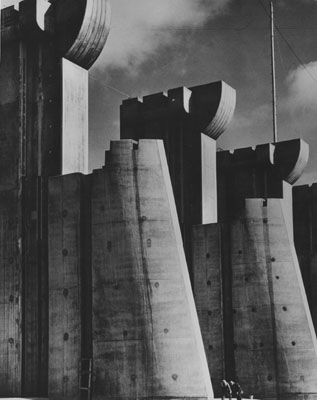
ThumbnailMargaret Bourke-White: Fort Peck Dam 
About this photographer | Photographs by this photographer 


   Themes 
  
ThumbnailPhotojournalism: Iconic images 
ThumbnailPhotojournalism: Press photographs with paint or instructions 
ThumbnailPublications: Illustrated magazines: Paris Match 
ThumbnailPublications: Illustrated magazines: VU 
 
  
   Events 
  
ThumbnailExecution of Ruth Synder 
ThumbnailHindenburg disaster (6 May 1937) 
 
  
   Still thinking about these... 
  
ThumbnailHindenburg 
ThumbnailThe end of Gen Arnulfo Gomez (1927) 
 
  
Refreshed: 05 June 2013, 22:15


HOME  BACKFREE NEWSLETTER
 Facebook LuminousLint 
 Twitter @LuminousLint