Luminous-Lint - for collectors and connoisseurs of fine photography
HOME  BACKFREE NEWSLETTER
   Make a pledge on Kickstarter to support the next phase of Luminous-Lint
Many thanks, Alan


Getting around


HomeWhat's NewContentsVisual IndexesOnline ExhibitionsPhotographersGalleries and DealersThemes
AbstractEroticaFashionLandscapeNaturePhotojournalismPhotomontagePictorialismPortraitScientificStill lifeStreetWar
TimelinesTechniquesLibraryImages and WordsSupport 
 

Social media

Share |


HomeContentsThemes > Health

Contents

565.01   Mental illness
565.02   Insane asylum patients (1870s)
565.03   James Crichton-Browne: West Riding Lunatic Asylum, Wakefield, Yorkshire, Great Britain
565.04   Albert Londe: Female patients with mental illness
565.05   Charles Nègre: Vincennes Imperial Asylum (1859)
565.06   Picturing disability
565.07   W. Eugene Smith: Minamata
565.08   Joy Christiansen: Family Gathering
This theme includes example sections and will be revised and added to as we proceed. Suggestions for additions, improvements and the correction of factual errors are always appreciated. 
  
Status: Collect > Document > Analyse > Improve
 
  
565.01   Documentary >  Mental illness 
  
Thumbnail Thumbnail Thumbnail Thumbnail  
  
Hugh Welch Diamond used photography as an addition to the patient records that he kept in his role as superintendent of the female department of Surrey County Asylum in the UK. 
  
   Scientific Medical 
View exhibition 
Title | Lightbox | Checklist
 
  
565.02   Documentary >  Insane asylum patients (1870s) 
  
Thumbnail Thumbnail Thumbnail  
  
This series of portraits of Louisa Blaney, Caroline Nightingale and Elizabeth Tappenden taken by an unknown photographer, probably British, are in the Metropolitan Museum of Art
  
   Scientific Medical 
View exhibition 
Title | Lightbox | Checklist
 
  
565.03   Documentary >  James Crichton-Browne: West Riding Lunatic Asylum, Wakefield, Yorkshire, Great Britain 
  
Thumbnail Thumbnail Thumbnail  


   Scientific Medical 
View exhibition 
Title | Lightbox | Checklist
 
  
565.04   Documentary >  Albert Londe: Female patients with mental illness 
About this photographer | Photographs by this photographer 
  
Thumbnail Thumbnail Thumbnail  


   Scientific Medical 
View exhibition 
Title | Lightbox | Checklist
 
  
565.05   Documentary >  Charles Nègre: Vincennes Imperial Asylum (1859) 
About this photographer | Photographs by this photographer 
  
Thumbnail Thumbnail Thumbnail Thumbnail Thumbnail Thumbnail Thumbnail Thumbnail Thumbnail Thumbnail Thumbnail Thumbnail Thumbnail Thumbnail Thumbnail  
  
The following contemporary account was published on the "Imperial Asylum at Vincennes for Convalescent Workman" The Medical News and Library, Vol.XVIII, December, 1860, No. 216, p.184-185
Imperial Asylum at Vincennes for Convalescent Workman. - The Moniteur Universal of the 9th of July contains an interesting account of the convalescent hospital, established by the Emperor of the French, in the neighbourhood of Paris, from which we extract the following particulars: —
 
The Asylum of Vincennes was founded by a decree of the 8th March, 1855, for the temporary reception, during their convalescence, of workmen who had received injuries or contracted diseases. The building having been finished, and the internal arrangements completed, the inauguration of the Imperial Asylum took place on the 31st of August, 1857. It has now been in operation for nearly three years.
 
Nearly forty acres of forest, belonging to the domains of the Crown, were consecrated to the Asylum, which is built upon an elevated terrace, freely exposed to the air from all quarters. Since the opening of the institution, up to the end of June 1860 (comprehending a period of two years and ten months), the number of convalescents admitted has amounted to 14,000. These convalescents belong to the following categories: 1st. Convalescents sent from the hospitals of Paris and the suburbs; 2d. Convalescents sent by the local charitable institutions of the city; 3. Convalescents from injuries received in the public works; 4th. Members of societies of workmen established for their mutual assistance; 5th. Workmen belonging to establishments, the directors of which have obtained from the Minister of the Interior authorization to send, on payment of a subscription, their convalescents to the Asylum, such as the railroads, gasworks, and some large private establishments; 6th. Workmen who have been treated at their own homes, and who have received from their medical attendant certificate of convalescence.
 
It is by the express orders of the Emperor that the Asylum is now open, without distinction, to every convalescent workman. There are at present 411 beds.
 
Two elegant vehicles are attached to the institution, and bear the imperial arms. One of these is of the same size as an ordinary omnibus, the other is somewhat smaller. Every day one or other of these vehicles, according to the number requiring removal, goes to the various hospitals to pick up the convalescents, and even goes to the residences of those who have been treated at their own homes. The same vehicles convey the inmates back to Paris when they leave the Asylum. The first time that the large omnibus stopped in front of the Hotel-Dieu a crowd of spectators speedily assembled; people asked one an other what could be the meaning of this elegant vehicle with the imperial arms in such a locality; but when the spectators saw the poor convalescents, weakened by disease, come out of the hospital and get into the omnibus, and when it was known that they were about to be conveyed to the Imperial Asylum, they broke out into hearty applause. How, in fact, could they help being affected on seeing the paternal cares of the Emperor lavished indiscriminately on all the workmen, on all the laborious classes?
 
The mean term of residence in the Asylum is 22 days. Thanks to the hygienic resources of the institution, the period of convalescence from fevers is comparatively short. The principle of the Asylum is that every convalescent shall remain in the Asylum until he is completely restored to health, or until his disease has been recognized as incurable.
 
Diet of the Institution. — The diet is regulated by the director, and by the superintending medical officer of the establishment. Care has been taken to fix the hours of the different meals, in conformity with the usual habits of the working classes. At half past seven in the morning the inmates get a bowl of soup. Breakfast is at half past ten, and consists of stewed meat and vegetables. Five o'clock is the dinner hour: this meal consists of soup, roast meat, and vegetables. Each convalescent receives daily about a pint of wine, and as much bread of the first quality as he desires. On the average, each inmate consumes daily about a pound and a half of bread. If necessary, a special dietary is prescribed in particular cases. The sum allotted for the food of each inmate is tenpence-halfpenny a day, not comprehending the general expenses of the establishment.
 
If the convalescents desire it, and if their strength permits, they are employed in various capacities about the establishment, under the direction of the gardener, the smith, the carpenter, etc. In this case, they receive a small sum of money and half a pint of wine in addition to the regular allowance Those of the inmates who do not work have various amusements provided for them, such as bowls, skittles, dominoes, etc.; cards are prohibited.
 
The library is open daily, and contains 4000 volumes, and illustrated newspapers. Most of the volumes have been presented by the booksellers of Paris. In general, about 50 readers may be found in the library at a time; on one occasion 96 were counted.
 
The conduct of all in the Asylum is exemplary. They submit without a word to the rules of the institution, are courteous to one another, take care of the furniture of the establishment and of the flowers in the garden, and keep their dormitories in a state of perfect cleanliness. Although not required, the majority of the inmates attend chapel on Sunday.
 
The staff of the establishment consists of a director, a treasurer, a medical superintendent, with three resident pupils; six Sisters of the Order of the Ladies of St. Augustine of Belgium ; a secretary and five clerks ; a storekeeper; four overseers; and at least forty persons in subordinate positions, such as cooks, grooms, gardeners, etc.
 
An infirmary is connected with the Asylum. During the year 185S, 1859, nearly 1100 patients, presenting various affections more or less severe, have been under treatment ; during this time only 30 deaths occurred.
 
The anticipated expenses for the present year are between fourteen and fifteen thousand pounds.— Ed. Med. Journ. , Sept. 1860.
 
  
565.06   Documentary >  Picturing disability 
  
Thumbnail Thumbnail Thumbnail Thumbnail Thumbnail Thumbnail Thumbnail Thumbnail Thumbnail Thumbnail Thumbnail Thumbnail Thumbnail Thumbnail Thumbnail Thumbnail Thumbnail Thumbnail Thumbnail Thumbnail Thumbnail Thumbnail Thumbnail Thumbnail Thumbnail Thumbnail Thumbnail Thumbnail Thumbnail Thumbnail Thumbnail Thumbnail Thumbnail Thumbnail Thumbnail Thumbnail Thumbnail Thumbnail Thumbnail Thumbnail Thumbnail Thumbnail Thumbnail Thumbnail Thumbnail Thumbnail Thumbnail Thumbnail Thumbnail Thumbnail Thumbnail Thumbnail  
  
Midget, feeble-minded, crippled, lame, and insane: these terms and the historical photographs that accompany them may seem shocking to present-day audiences. A young woman with no arms wears a revealing dress and smiles for the camera as she holds a tea cup with her toes; a man holds up two prosthetic legs while his own legs are bared to the knees to show his missing feet. The photos were used as promotional material for circus sideshows, charity drives, and art galleries. They were found on begging cards and in family albums. In their book Picturing Disability, Bogdan and his collaborators gather over 200 historical photographs showing how people with disabilities have been presented and exploring the contexts in which they were photographed.
 
In his book Bogdan not only examines the images, he also turns his gaze on the people behind the camera. He examines the historic and cultural environment of the photographs to decipher the relationship between the images and the perspectives of the picture makers. In analyzing the visual rhetoric of these photographs, Bogdan identifies the wide variety of genres, from sideshow souvenirs to clinical photographs. Ranging from the 1860s, when photographs first became readily available, to the 1970s, when the disability rights movement became a force for significant change, Bogdan chronicles the evolution of disability image creation. Picturing Disability takes the reader beyond judging images as positive or slanderous to reveal how particular contexts generate specific emotions and lasting depictions. In this exhibit Bogdan shares a some images from that his book.
 
Robert Bogdan, December 2012
 
Robert Bogdan with Martin Elks and James Knoll, 2011, Picturing Disability (Syracuse University Press) 
  
565.07   Documentary >  W. Eugene Smith: Minamata 
About this photographer | Photographs by this photographer 
  
Thumbnail Thumbnail  
  
Between 1971 and 1973 W. Eugene Smith lived with his Japanese wife Aileen in Minamata, Japan during the period that deformities and health issues in the surrounding area were being caused by mercury poisoning. The poisoning was caused by the discharge of heavy metals from a Chisso factory into the water sources which was taken up by fish and so affected the human population. W. Eugene Smith documented the health issues and the public meetings leading to him being attached by Chisso employees.
 
The most famous photograph of the series was Tomoko Uemura in Her Bath which showed a severly deformed and naked child being held by her mother while being bathed. The photograph was withdrawn from circulation out of the respect for the family. 
  
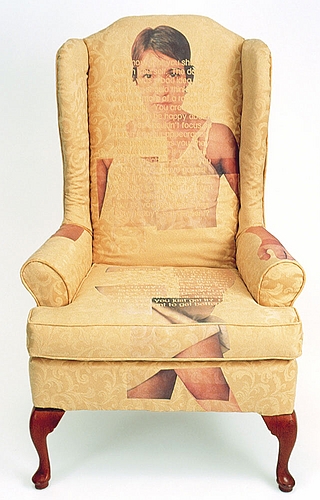
565.08   Documentary >  Joy Christiansen: Family Gathering 
About this photographer | Photographs by this photographer 
  
Thumbnail Thumbnail Thumbnail Thumbnail Thumbnail Thumbnail Thumbnail Thumbnail Thumbnail Thumbnail Thumbnail Thumbnail Thumbnail Thumbnail Thumbnail Thumbnail Thumbnail Thumbnail Thumbnail Thumbnail Thumbnail Thumbnail  
  
Artist statement - Joy Christiansen
 
In today’s culture, negative body image and eating disorders are increasingly common. This is influenced by an overabundance of visual representations that occur in film, television and mass print media promoting dieting, thinness, and the objectification of women’s bodies. In response to this trend, Family Gathering, a photo-based installation, presents the harsh reality of the disorder through personal interviews of both individual sufferers and from their family members and friends.
 
In this exhibition, a room full of furniture is arranged in the format of a typical upper-middle class living room in the United States. Each piece of furniture is adorned with photographic imagery and text from the personal interviews. The combination of furniture, photography and text is used to initiate dialogue about this difficult and important subject. The comfortable and familiar veneer of the furniture serves as a welcome invitation to the viewer. Once the subtle imagery and text become visible, anonymous stories are revealed through each piece of furniture, bringing the room to life. 
  
   Joy  Christiansen 
View exhibition 
Title | Lightbox | Checklist


alan@luminous-lint.com


HomeContents > Further research


Thumbnail Thumbnail Thumbnail Thumbnail  
  
General reading 
  
Bogdan, Robert; Elks, Martin & Knoll, James A., 2012, Picturing Disability: Beggar, Freak, Citizen and Other Photographic Rhetoric, (Syracuse University Press) isbn-10: 0815633025 isbn-13: 978-0815633020 [Δ
  
Eikenberry, Jill & Tempest, Terry, 1998, Art.Rage.Us: Art and Writing by Women with Breast Cancer, (Chronicle Books) isbn-10: 0811821307 [Δ


Readings on, or by, individual photographers 
  
Sophie Calle 
  
Calle, Sophie, 2012, Sophie Calle: Blind, (Actes Sud; Braille edition) isbn-10: 2330000588 isbn-13: 978-2330000585 [Δ
  
Lauren Greenfield 
  
Greenfield, Lauren & Brumberg, Joan Jacobs, 2006, Thin, (Chronicle Books) isbn-10: 081185633X isbn-13: 978-0811856331 [Δ
  
Sebastião Salgado 
  
Salgado, Sebastião, 2003, L'Eradication de la polio, (Seuil) [Δ
  
W. Eugene Smith 
  
Smith, W. Eugene & Smith, Aileen M., 1975, Minamata, (New York: Holt, Rinehart and Winston) [Δ


If you feel this list is missing a significant book or article please let me know - Alan - alan@luminous-lint.com 
  

HomeContentsPhotographers > Photographers worth investigating

 
Jane Evelyn Atwood  (1947-) • Marat Baltabaev • William H. Bell  (1830-1910) • Carl Curman  (1833-1913) • Hugh Welch Diamond  (check) • Duchenne & Adrien Tournachon • Philip Jones Griffiths  (1936-2008) • Larry Louie • Wilhelm Konrad Röntgen  (1845-1923) • W. Eugene Smith  (1918-1978) • Southworth & Hawes • Oliviero Toscani  (1942-)
HomeThemesDocumentary > Health 
 
A wider gazeA closer lookRelated topics 
  
Hypnotism 
Medical 
Mental health and psychiatry 
X-rays 


HomeContentsOnline exhibitions > Health

Please submit suggestions for Online Exhibitions that will enhance this theme.
Alan - alan@luminous-lint.com


ThumbnailDocumentary: 19th Century Charles Nègre and the Vincennes Imperial Asylum (1859) 
Title | Lightbox | Checklist
Released (August 23, 2010)
ThumbnailJean-Philippe Charbonnier: Psychiatric hospitals 
Title | Lightbox | Checklist
Released (November 27, 2006)
ThumbnailJoy Christiansen: Family Gathering 
Title | Lightbox | Checklist
Released (April 14, 2007)
ThumbnailPicturing Disability 
Title | Lightbox | Checklist
Released (January 18, 2013)
ThumbnailPortrait: The Guinea Pig Club 
Title | Lightbox | Checklist
Released (July 18, 2010) Warning: These images may be considered disturbing as this exhibition remembers the pioneering plastic surgery of Archibald McIndoe. Thanks to Nicola Kurtz who photographed the 65th reunion of The Guinea Pig Club in September 2006.
ThumbnailScientific: Medical 
Title | Lightbox | Checklist
Released (May 16, 2010) Warning: These images may be considered disturbing and I would recommend that you do not view this exhibition if you are of a sensitive disposition.
ThumbnailScientific: Medical - Guillaume-Amant Duchenne de Boulogne 
Title | Lightbox | Checklist
Released (May 8, 2010)
ThumbnailScientific: Medical - Mental health and hypnosis 
Title | Lightbox | Checklist
Improved (October 22, 2010) Warning: These images may be considered disturbing and I would recommend that you do not view this exhibition if you are of a sensitive disposition.
ThumbnailScientific: Medical - Mental health and hypnosis 
Title | Lightbox | Checklist
Improved (October 22, 2010) Warning: These images may be considered disturbing and I would recommend that you do not view this exhibition if you are of a sensitive disposition.
ThumbnailScientific: Photomicroscopy of Joseph Janvier Woodward (1833-1884) 
Title | Lightbox | Checklist
Released (August 23, 2006)


HomeVisual indexes > Health

Please submit suggestions for Visual Indexes to enhance this theme.
Alan - alan@luminous-lint.com


   Photographer 
  
ThumbnailHenry Peach Robinson: Fading Away 
About this photographer | Photographs by this photographer 
ThumbnailW. Eugene Smith: Minamata 
About this photographer | Photographs by this photographer 
 
  
   Themes 
  
ThumbnailDocumentary: Health 
ThumbnailDocumentary: Health: AIDS - HIV 
ThumbnailDocumentary: Health: Abortion 
ThumbnailDocumentary: Health: Agent Orange 
ThumbnailDocumentary: Health: Cancer 
ThumbnailDocumentary: Health: Dental care 
ThumbnailDocumentary: Health: Infant mortality 
ThumbnailDocumentary: Health: Mercury poisoning 
ThumbnailDocumentary: Health: Radiation 
ThumbnailDocumentary: Health: Tuberculosis 
 
  
Refreshed: 19 May 2013, 11:26


HOME  BACKFREE NEWSLETTER
   Make a pledge on Kickstarter to support the next phase of Luminous-Lint
Many thanks, Alan
