Contents
| This theme includes example sections and will be revised and added to as we proceed. Suggestions for additions, improvements and the correction of factual errors are always appreciated. | Introduction 10.01 Scientific > Introduction to scientific photography
Human perception is based upon a continuous stream of sensory impulses that are never exactly the same - when the first photograph captured a single moment permanently the way we perceived the world changed in the same way that when we saw the first picture of the Earth from space. It was a defining moment that forced us to examine the preservation of a single view of a captured reality. Since that moment photography has been extended by new scientific discoveries and approaches to push forward our understanding of the world around us in ways that our 'normal' vision does not permit.
There are incalculable benefits of scientific photography in industry, medicine, forensics and defense. In the natural science every branch of it has been fundamentally enhanced by images that allow us to extend our limited vision by the use of specialized techniques. Examples include high speed photography to capture an instant such as the falling of a droplet of milk, the passing of a bullet through an apple or the spinning of a rotor blade. At the opposite end slow motion demonstrates trends in movement such as the swinging of an arm or the movement of a horses' leg.
Still other techniques extend the range of the visible light spectrum by the use of x-rays, infrared and ultraviolet light and improved night vision cameras allow us to examine the nocturnal habits of species in ways that were not previously possible.
The use of photomicroscopy allows us to go into the structure of objects, down the blood vessels and nervous systems of animals and using higher powered techniques into the atoms themselves. The advances in medical photography and imaging have through the works of Lennart Nilsson and Alexander Tsiaris revealed how the body functions with clarity.
At the macro level of astronomy we see universes in a single image and study the inter-relationships of gravitational forces between objects. Using data visualization techniques we can create images that appear to be photographs but are in fact representations of data - the patterns revealing understanding of weather patterns or fluid dynamics in novel and informative ways.
Putting these points together we can see:
Contemporary examples 10.02 Scientific > Contemporary scientific imagery
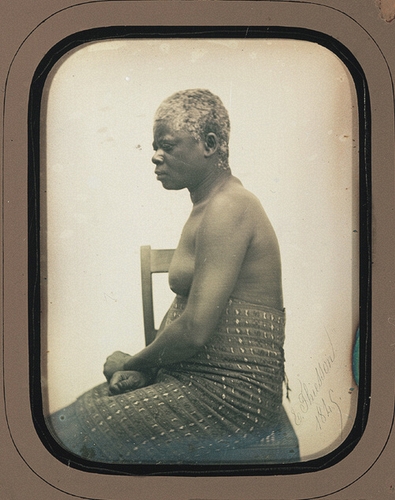
Themes 10.03 Scientific > Anthropology
Anthropology (from the Greek anthropos, "man", and -logia, "discourse" or "study“) is the study of humanity.
Ethnology (from the Greek ethnos, meaning "people, nation, race") is the branch of anthropology that compares and analyzes the origins, distribution, technology, religion, language, and social structure of the ethnic, racial, and/or national divisions of humanity. 10.04 Scientific > 19th century botany
Worlds fairs and international exhibitions 10.05 Scientific > The relationships between science and the World Fairs and International Exhibitions
Field books 10.06 Scientific > Smithsonian Field Book Project
The Smithsonian Field Book Project (FBP) commenced in 2010 to put online the thousands of field books and research notes created by the scientists. Although this registary has commenced with the material held within the numerous Smithsonian collections the intention is to extend it to include field books from around the USA. The photographic richness within these collections has yet to be explored.
The Field Book Project Photographers 10.07 Scientific > Berenice Abbott: Science About this photographer | Photographs by this photographer
Berenice Abbott is well know in photography for her advocacy of the documentation of Paris by Eugène Atget and for her project Changing New York. What is not so well known is her innovative body of work on the depiction of science. In the late 1950s following the impetus of Sputnik she worked for two years at MIT documenting mechanics, electromagnetism, and waves.
"The scientific photographs had to be carefully composed, but they couldn't look that way. I didn't want the composition to be so obvious as to take over . . . when you look at a photograph and all you can see is the composition then you know it is a big flop." (Hank O'Neal, Berenice Abbott: American Photographer, 1982)
The aim was to create photographs that clearly showed in a comprehensible way the scientific concepts to be illustrated. This was a challenge and Bereince Abbott developed cameras, lighting systems and techniques to achieve visual clarity to aid understanding.
For her photograph Beams of Light Through Glass she described the process:
"Multiple beams of light from a source change direction when they go into a glass plate and when they emerge. Some waves are reflected inside the glass and then escape. The prism photograph was done very carefully. The prism was filled with water and not one drop of air was inside. The box that held the light source was specially designed and purposely looks as it does to make for a better composition." (Hank O'Neal, Berenice Abbott: American Photographer, 1982) 10.08 Scientific > Rose-Lynn Fisher: Bee About this photographer | Photographs by this photographer
Reflections
Rose-Lynn Fisher
Photographs of a honeybee through a scanning electron microscope reveal a realm of design and function that stretches our sense of scale and wonder to another order of magnitude and brings science to the threshold of art. With highly magnified views of the bee’s eyes, antennae, wings, legs, hair, and abdomen through the perspective of microscopy, these images present a new frontier right here in our everyday world. In the process of exploring a bee under a microscope, we enter a realm of design, structure and pattern at an astonishing level of detail; and as the magnifications increase, the integrity of form is continuously revealed. When our sense of scale has no frame of reference, the micro and macro worlds seem interchangeable. Our familiar context confounded, the interplay of observation and imagination can inspire new ideas, connections, and applications. Seeing what exists at the micro level naturally extends to a more sensitized awareness of what is all around us in the visible and invisible worlds. Considering the endless structures and forms that comprise a little bee at higher and higher magnifications, we get a hint of the amazing, unending complexity of nature all around us. This can be startling and inspiring, and my hope is to foster deeper curiosity, greater appreciation, awe and marvel for the honeybee. After looking up close at the honeybee, one can never think of this tiny amazing creature in the same way again.
Rose-Lynn Fisher Bee (Princeton Architectural Press, 2010).
Of the ten million or so different species of insects on our planet, none is more fascinating than the honeybee. one of the oldest forms of animal life still in existence from the Neolithic age, bees have been worshipped and mythologized since the beginning of human history. Known popularly for their industriousness (“as busy as a bee”) and highly valued for their role in agricultural pollination (every third bite we take depends on them), bees are now kept by a quarter-million beekeepers in the united states alone, and millions more around the world.
Honeybees were the first creatures examined by seventeenth-century scientists whose primitive microscopes suggested a complex system of construction. Now, magnified hundreds to thousands of times with a scanning electron microscope, honeybees appear as architectural masterpieces—an elegant fusion of form and function.
Melding art and science, photographer Rose-Lynn Fisher puts this modern tool to creative use in order to reveal the microscopic majesty of these natural wonders. BEE presents sixty astonishing photographs of honeybee anatomy in magnifications ranging from 10x to 5000x. rendered in stunning detail, Fisher’s photographs uncover the strange beauty of the honeybee’s pattern, form, and structure. Comprising 6,900 hexagonal lenses, their eyes resemble the structure of a honeycomb. the honeybee’s proboscis—a strawlike appendage used to suck nectar out of flowers, folds resembles a long, slender hairy tongue. Its six-legged exoskeleton is fuzzy with hairs that build up a static charge as the bee flies in order to electrically attract pollen. wings clasp together with tiny hooks and a double-edged stinger resembles a serrated hypodermic needle. the honeybee’s three pairs of segmented legs are a revelation, with their antennae cleaners, sharp-pointed claws, and baskets to carry pollen to the hive. these visual discoveries, made otherworldly through Fisher’s lens, expand the boundaries of our thinking about the natural world and stimulate our imaginations. BEE features a foreword by nature writer and New York Times editorial board member Verlyn Klinkenborg. Science and religion 10.09 Scientific > Evolution and the biblical flood
alan@luminous-lint.com |
General reading Bendavid-Val, Leah, 1994, National Geographic: The Photographs, (Washington, National Geographic) [Δ] Edwards, Elizabeth, 2001, Raw Histories: Photographs, Anthropology and Museums, (Berg Publishers) isbn-10: 1859734979 isbn-13: 978-1859734971 [Δ] Ellenbogen, Josh, 2012, Reasoned and Unreasoned Images: The Photography of Bertillon, Galton, and Marey, (Penn State University Press) isbn-10: 0271052597 isbn-13: 978-0271052595 [Δ] Escard, F., 1886, Le Prince Roland Bonaparte in Laponie: Episodes et Tableaux, (Paris: G. Chamerot) [Δ] Figuier, Louis, 1869, Merveilles de la Science, (Paris) [Δ] Girard, Jules, 1869, La Chambre Noire et le Microscope, (Paris: F. Savy) [Δ] Heiferman, Marvin (ed.) & Foresta, Merry, 2012, Photography Changes Everything, (Aperture / Smithsonian) isbn-10: 1597111996 isbn-13: 978-1597111997 [Δ] Keller, Corey, 2008, Brought to Light: Photography and the Invisible, 1840-1900, (Yale University Press) isbn-10: 0300142102 isbn-13: 978-0300142105 [Δ] Krauss, Rolf E., 1978, ‘Photographs as Early Science Book Illustrations‘, History of Photography, vol.2, no.4, pp.291-314 [Δ] Libbrecht, Kenneth, 2007, The Art of the Snowflake: A Photographic Album, (Voyageur Press) isbn-10: 0760329974 isbn-13: 978-0760329979 [Δ] Malm, A.W., 1867, Monographie illustrée du baleinoptère trouvé le 29 Octobre 1865 sur la côte occidentale de Suède, (tockholm: P. A. Norstedt et fils) [Δ] Ostroff, Eugene (ed.), 1987, Pioneers of Photography: Their Achievements in Science and Technology, (Springfield, VA: The Society for Imaging Science and Technology) [Δ] Pinney, Christopher, 2011, Photography and Anthropology, (Reaktion Books) isbn-10: 1861898045 isbn-13: 978-1861898043 [Δ] Scott, Jean, 2002, Stanhopes: A Closer View - A History and Handbook for Collectors of Microphotographic Novelties, (Greenlight Publishing) isbn-10: 1897738099 isbn-13: 978-1897738092 [Δ] Thomas, Ann (ed.), 1997, Beauty of Another Order: Photography in Science, (New Haven: Yale University Press) isbn-10: 0300073402 isbn-13: 978-0300073409 [Δ] Tucker, Jennifer, 2006, Nature Exposed: Photography as Eyewitness in Victorian Science, (Johns Hopkins University Press) isbn-10: 0801879914 isbn-13: 978-0801879913 [Δ] Valens, Evans G., 1969, The Attractive Universe: Gravity and the Shape of Space, (Cleveland: World Publishing Co.) [Illustrations by Berenice Abbott] [Δ] Readings on, or by, individual photographers Berenice Abbott Abbott, Berenice, 2012, Documenting Science, (Steidl) isbn-10: 3869304316 isbn-13: 978-3869304311 [Reprint edition] [Δ] Anna Atkins Atkins, Anna, n.d.Cyanotypes of British and Foreign Flowering Plants and Ferns, (Private publication) [Δ] Atkins, Anna, 1843-1854, Photographs of British algae: cyanotype impressions, (Sevenoaks) [Private publication] [Δ] Schaaf, Larry J. (ed.), 1985, Sun Gardens: Victorian Photograms by Anna Atkins, (New York: Aperture) [Δ] Hugo Bernatzik Byer, D., 1999, Der Fall H. A. Bernatzik. Ein Leben zwischen Ethnologie und Öffentlichkeit 1897-1953, (Cologne: Böhlau) isbn-10: 3412083992 [German] [Δ] Golding Bird Bird, Golding, 1844, Elements of Natural Philosophy: Being an Experimental Introduction to the Study of the Physical Sciences, (London: John Churchill) [2nd edition, and later editions] [Δ] Bird, Golding, 1939, 20 April, ‘Fac-Simile of a Photogenic Drawing‘, Mirror, vol.XXXIII, no.945 [With reprint of Bird’s article in Magazine of Natural History] [Δ] Bird, Golding, 1939, April, ‘Observations on the Application of Heliographic or Photogenic Drawing to Botanical Purposes‘, Magazine of Natural History, vol.n.s. 3, pp.188-92 [Δ] Charles Brooke Brooke, Charles, 1847, ‘On the Automatic Registration of Magnetometers, and other Meteorological Instruments, by Photography‘, Philosophical Transactions of the Royal Society of London, Part I, vol.137, pp.69-77 [Δ] Brooke, Charles, 1850, ‘On the Automatic Registration of Magnetometers, and Meteorological Instruments, by Photography. No. III‘, Philosophical Transactions of the Royal Society of London, vol.140, pp.83-97 [Δ] Brooke, Charles, 1852, ‘On the Automatic Registration of Magnetometers, and Meteorological Instruments, by Photography. No. IV‘, Philosophical Transactions of the Royal Society of London, vol.142, pp.19-24 [Δ] René Patrice Proudhon Dagron Dagron, R.P.P., 1864, ‘Microscopic photography‘, British Journal of Photography, pp.402 [Δ] Dagron, R.P.P., 1864, Traité de Photographie Microscopique, (Paris) [Δ] John Benjamin Dancer Arden, L.L., 1960, John Benjamin Dancer: The Originator of Microphotography, (London: The Library Association) [Δ] Bracegirdle, Brian & McCormick, James B., 1993, The Microscopic Photographs of J.B. Dancer, (Chicago: Science Heritage Ltd) isbn-10: 0940095106 isbn-13: 978-0940095106 [Δ] Délié & Béchard Mariette, Auguste, 1872, Album du Musée de Boulaq: Comprenant quarante planches photographiées par MM. Délié et Béchard avec un texte explicatif, (Le Caire: Mourths & Cie, Imprimeurs-Editeurs) [Δ] Harold E. Edgerton Bruce, Roger (ed.), 1994, Seeing the Unseen: Dr. Harold Edgerton and the Wonders of Strobe Alley, (Rochester, NY: George Eastman House) [Δ] Edgerton, Harold E., 2000, Exploring the Art and Science of Stopping Time: A CD-ROM Based on the Life and Work of Harold E. Edgerton, (The MIT Press) [Δ] Edgerton, Harold E. & Killian, James R., 1954, Flash!: Seeing the Unseen By Ultra High-speed Photography, (Boston: Charles T. Branford) [Second edition] [Δ] Edgerton, Harold E. & Killian, James R., 1984, Moments of Vision: The Stroboscopic Revolution in Photography, (The MIT Press) isbn-10: 0262550105 isbn-13: 978-0262550109 [Δ] Elkins, James & Edgereton, Harold, 2003, After & Before: Documenting the A-bomb, (Roth Horowitz, LLC/PPP Editions) isbn-10: 0971548005 isbn-13: 978-0971548008 [Δ] Jussim, E., 1987, Stopping Time, The Photographs of Harold Edgerton, (New York: Abrams) [Δ] Albert Londe Londe, Albert, 1888, La Photographie dans les arts, les sciences et l'industrie, (Paris: Gauthier -Villars et fils) [Δ] Londe, Albert, 1893, La photographie dans les voyages d'exploration et les missions scientifique, ([Paris?: Association Pour L'Avancement des Sciences?]) [Δ] Étienne Jules Marey 1977, E. J. Marey, 1830–1904: La Photographie du Mouvement, (Paris: Centre Georges Pompidou) [Δ] Braun, Marta, 1994, Picturing Time: The Work of Etienne-Jules Marey (1830–1904), (Chicago and London: The University of Chicago Press) [Δ] Eadweard Muybridge Adam, Hans-Christian, 2010, Eadweard Muybridge: The Human and Animal Locomotion Photographs, (Taschen) isbn-10: 3836509415 isbn-13: 978-3836509411 [Δ] Haas, Robert Bartlett, 1976, Muybridge: Man in Motion, (Berkeley: University of California Press) [Δ] Muybridge, Eadweard, 1893, Descriptive Zoopraxography or the Science of Animal Locomotion made popular, (University of Pennsylvania: Bureau of Education at the World's Columbian Exposition, in Zoopraxographical Hall) [Δ] Muybridge, Eadweard, 1972, Eadweard Muybridge: The Stanford Years, 1872–1882, (Stanford, CA: Stanford University Museum of Art) [Introduction by Anita Ventura Mozley] [Δ] Muybridge, Eadweard, 1979, Muybridge's Complete Human and Animal Locomotion, (New York: Dover) [Introduction by Anita Ventura Mosley] [Δ] Muybridge, Eadweard, 1979, Muybridge’s Complete Human and Animal Locomotion, (New York: Dover Publications) [3 vols., Introduction by Anita Ventura Mozley] [Δ] Stillman, J.D.B., 1882, The Horse in Motion, As Shown by Instantaneous Photography, With a Study on Animal Mechanics, (Boston: James R. Osgood and Company) [Δ] Lennart Nilsson Forsell, Jacob (ed.), 2002, Lennart Nilsson: Images of His Life, (Stockholm: Bokförlaget Max Ström) [Δ] Nilsson, Lennart, 1966, A Child is Born: The Drama of Life Before Birth, (New York: Delacorte Press) [Reprinted 1971] [Δ] Nilsson, Lennart, 1987, The Body Victorious: The Illustrated Story of our Immune System, (New York: Delacorte Press) [Δ] Charles Piazzi Smyth Smyth, C. Piazzi, 1858, Teneriffe - An Astronomer's Experiment, (Lowell Reeve) [Δ] B.L. Spackman Physick, John, 1975, Photography and the South Kensington Museum, (London: Victoria & Albert Museum) [Benjamin L. Spackman, pp. 3-4] [Δ] Henry Fox Talbot Brusius, Mirjam; Dean, Katrina & Ramalingam, Chitra (eds.), 2013, William Henry Fox Talbot: Beyond Photography, (Yale University Press / Yale Center for British Art and the Paul Mellon Centre for Studies in British Art) isbn-13: 978-0300179347 [With essays by Katrina Dean, Eleanor Robson, Mirjam Brusius, Graham Smith, Larry J. Schaaf, Simon Schaffer, Herta Wolf, Vered Maimon, Anne Secord, Chitra Ramalingam, and June Barrow-Green] [Δ] Smith, Graham, 1993, ‘Talbot and Botany: The Bertolini Album‘, History of Photography, vol.17, no.1, pp.33-48 [Δ] Joseph Janvier Woodward Woodward, J.J., 1873, November, U.S. Army Smithsonian Miscellaneous Collections, 262, The Toner Lectures, Washington, U.S.A., Lecture I: "On the Structure of Cancerous Tumours, and the Mode in which Adjacent Parts are Invaded." [Δ] Woodward, Joseph Janvier, 1871, Report to the Surgeon General of the United States Army on an Improved Method of Photographing Histological Preparations by Sunlight, (Washington D.C.) [Δ] If you feel this list is missing a significant book or article please let me know - Alan - alan@luminous-lint.com Resources
Medical and scientific photography http://msp.rmit.edu.au ...
| Eadweard Muybridge http://www.cmp.ucr.edu Go to the "Collections - Permanent" page.
| Inventions http://www.geh.org ...
| The Moon http://www.geh.org ...
| Nineteenth Century Balloons http://www.geh.org ...
| Images from Science http://www.rit.edu ... Images from Science: An Exhibition of Scientific Photography. Was on view at Rochester Institute of Photography from Oct 12 - Nov 8, 2002
| Andrew Davidhazy - Professor - Imaging and Photographic Technology, Rochester Institute of Technology http://www.rit.edu ... Has an amazing range of different studies in high speed and scientific photography. If you like the work of Harold Edgerton you will certainly like these.
| Lennart Nilsson http://www.rit.edu ... A pioneer in scientific and medical photography.
| German physicist Ernst Mach (1838-1916) http://www.bath.ac.uk ... Ernst Mach worked in the fields of optics, acoustics, ballistics, and gas dynamics. He and his colleagues took nearly 950 original photographs between 1885 and 1895 and this site includes examples.
| Laure Albin-Guillot (1879-1962) • Ottomar Anschütz (1846-1907) • François Arago (1786-1853) • Anna Atkins (1799-1871) • Arthur Clive Banfield (1875-1965) • Wilson A. Bentley (1865-1931) • Golding Bird (1814-1854) • Antonio Giulio Bragaglia (check) • Charles Brooke (1804-1879) • Louis Jacques Mandé Daguerre (1787-1851) • Andrew Davidhazy (1941-) • John Edward Davis (1815-1877) • John William Draper (1811-1882) • Harold E. Edgerton (1903-1990) • Armand Hippolyte Fizeau (1819-1896) • Sir Francis Galton (1822-1911) • Frank B. Gilbreth (1868-1924) • Lillian Gilbreth (1878-1972) • Gilbreth & Gilbreth • Ernst Mach (1838-1916) • Étienne Jules Marey (1830-1904) • Gjon Mili (1904-1984) • Eadweard Muybridge (1830-1904) • Richard Neuhauss • Lennart Nilsson (1922-) • Gary Schneider (1954-) • Thomas Smillie (1843-1917) • Henry Fox Talbot (1800-1877) • A.M. Worthington | Home > Themes > Scientific
|